

Activity Instruction Page
💡 Tip: When the print window opens, change the destination dropdown to ‘Save as PDF‘ to download this guide.
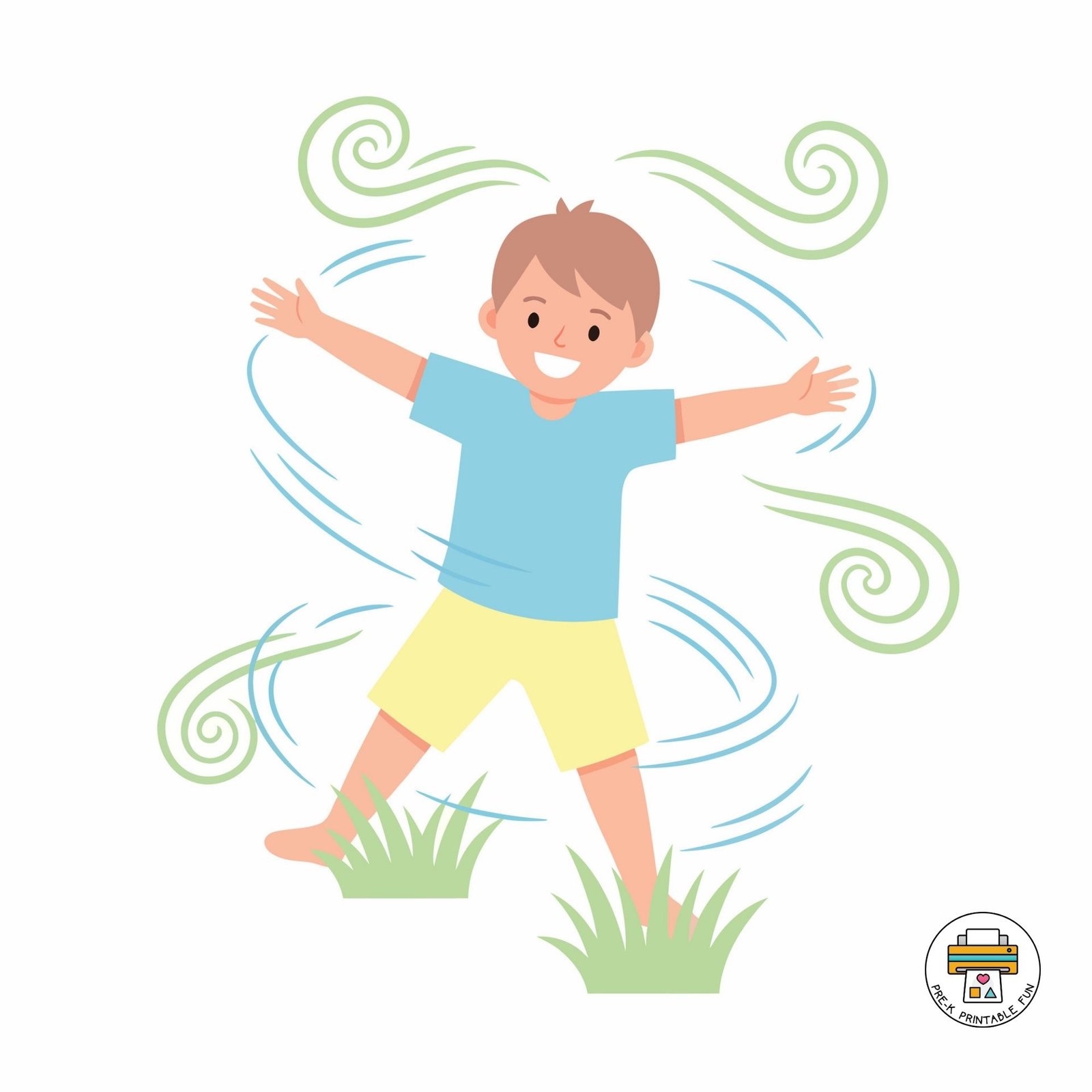
Wind Dance
- Activity Type: Hands-On Activity
- Theme: Clouds Wind & Rain
- Learning Center: Physical Development & Health
Get ready to dance with the wind! This activity encourages imaginative movement to understand how wind affects objects, enhancing gross motor skills, coordination, and spatial awareness in a playful way. Children can experiment with different wind intensities and even take turns creating the breeze themselves.
Materials & Direction
Materials List:
– Lightweight scarves, streamers, crepe paper strips, or ribbons
– Optional: small fans or paper plates as “wind makers”
Preschool Learning Objectives:
– Enhance gross motor skills through movement
– Improve coordination and body control
– Develop spatial awareness by exploring different movement patterns
– Foster imaginative play and creativity
Preschool Teacher Instructions:
1. Gather all materials and distribute a scarf or ribbon to each child.
2. Explain the concept of wind and how it can change in intensity.
3. Invite children to move, with the ribbon, like the wind, based on your prompts:
– Gentle breeze → slow twirls
– Strong wind → big running loops
– Swirling wind → spin around
4. Call out different “wind types” (gust, breeze, storm, swirl) to encourage varied movements.
5. For optional partner play, have one child use a fan or paper plate to create wind while another dances, then switch roles.
Differentiation Tips:
– Beginning Learners: Simplify the activity by focusing on basic movements like twirling and running without additional prompts. Provide physical support as needed.
– Developing Learners: Allow children to explore movements with light guidance, encouraging them to express how they feel the wind affects their dance.
– Mastered Learners: Introduce more complex movements or challenges, such as incorporating specific dance steps or creating a short dance routine that reflects different wind types.
Suggestions for Assessment:
– Observe children’s ability to follow movement prompts and adjust their actions based on the type of wind called out.
– Assess coordination and balance during various movements by noting how well they maintain control while dancing.
– Encourage children to describe their movements and feelings about the activity to gauge understanding of the concepts of wind and movement.
