

Activity Instruction Page
💡 Tip: When the print window opens, change the destination dropdown to ‘Save as PDF‘ to download this guide.
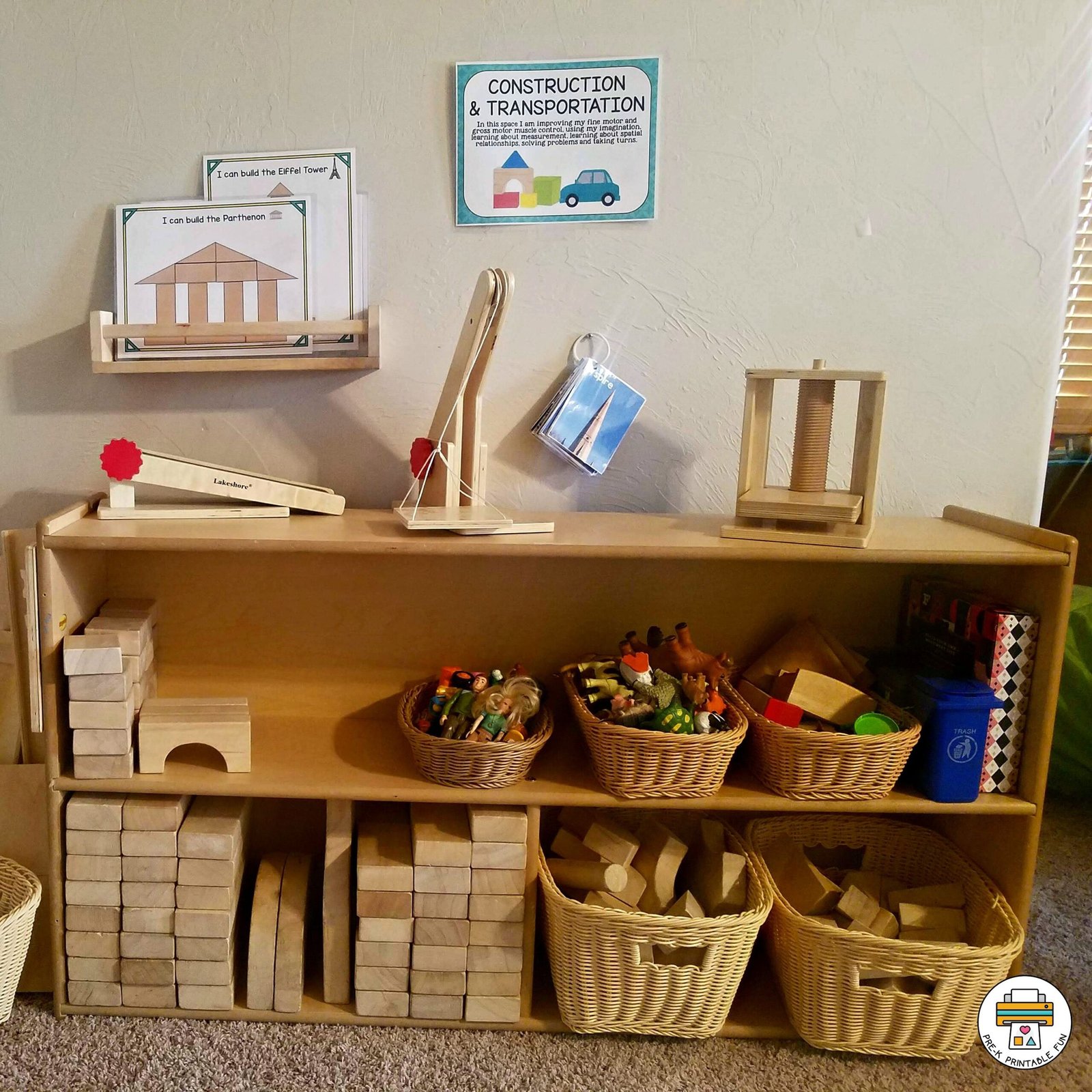
Around the World Blocks & Small World Play
- Activity Type: Hands-On Activity
- Theme: Around the World
- Learning Center: Blocks & Small World Play Center
Explore the world with our Around the World Construction and Small World Play Ideas! Fill your play space with multicultural people, landmarks, flags, planes, ships, and animals from around the globe. Let children’s imaginations take flight as they build and create in a world of their own!
Materials & Direction
Materials List:
1. Assorted blocks (wooden, plastic, foam)
2. Small world play figurines representing different cultures (e.g., people from different countries, animals specific to certain regions)
3. Small world play props (e.g., trees, vehicles, buildings)
4. World map or globe
5. Picture books or posters about different countries and cultures
Preschool Learning Objectives:
1. Cultivate creativity and imagination through building structures and creating imaginary worlds.
2. Develop problem-solving skills by constructing buildings and structures with blocks.
3. Promote cultural awareness by exploring different countries and cultures through small world play.
4. Enhance fine motor skills by manipulating and stacking blocks.
Teacher Instructions:
1. Set up a designated area in the classroom for the Around the World Construction, Blocks, and Small World Play activity. Provide a variety of blocks, small world play figurines, props, and visual aids such as a world map or globe.
2. Start by introducing the concept of different cultures and countries to the preschoolers. Show them pictures or read books about various countries to spark their interest.
3. Encourage the children to use the blocks to build structures representing famous landmarks or buildings from different countries. They can also create their own imaginative worlds using the small world play figurines and props.
4. Facilitate discussions about the cultural significance of the structures and characters the children create. Encourage them to ask questions and learn about different customs and traditions.
5. Offer support and guidance as needed, but allow the children to lead the play and exploration. Encourage them to work together, share ideas, and problem-solve collaboratively.
6. To differentiate instruction, provide additional resources such as books, videos, or pictures for children who are interested in learning more about specific countries or cultures. Offer different types of blocks for children with varying skill levels.
7. Assessment: Observe the children’s engagement, creativity, problem-solving skills, and interactions throughout the activity. Take note of their ability to incorporate cultural elements into their play and their fine motor skills while manipulating the blocks. Use this information to inform future activities and provide individualized support as needed.
Teacher Tips:
1. Encourage open-ended play and exploration to allow children to express their creativity and imagination.
2. Use language-rich interactions to facilitate discussions about different cultures and encourage vocabulary development.
3. Provide opportunities for children to collaborate and work together to build structures and create imaginary worlds.
4. Incorporate music and movement activities from different cultures to enhance the learning experience.
5. Display children’s creations and encourage them to share their stories and experiences with their classmates and families.
