

Activity Instruction Page
💡 Tip: When the print window opens, change the destination dropdown to ‘Save as PDF‘ to download this guide.
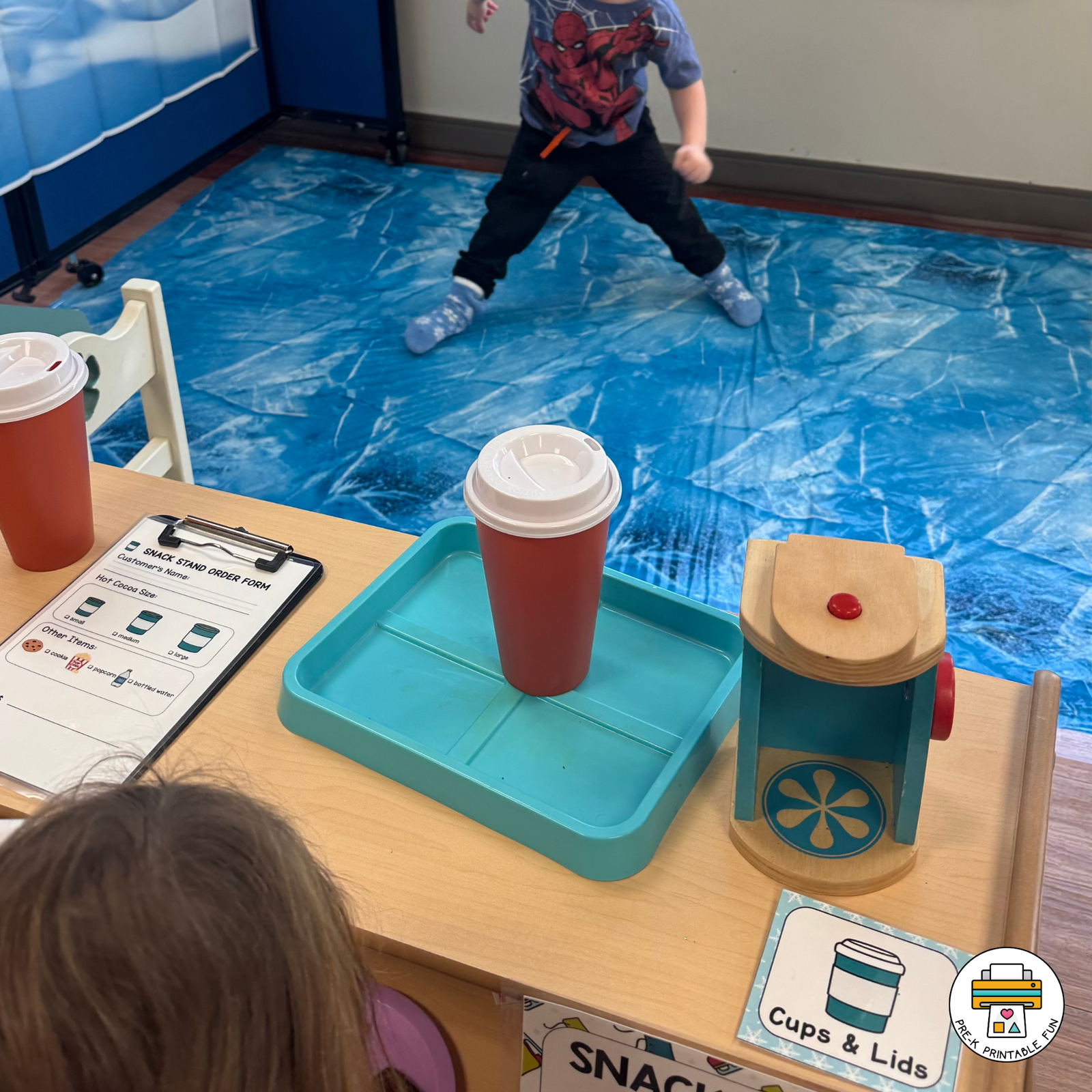
Icy Dramatic Play
- Activity Type: Hands-On Activity
- Theme: Penguins, Season: Winter
- Learning Center: Dramatic Play Center
Activity Description:
Preschoolers will love exploring the icy world of dramatic play! They can dress up in winter-themed costumes, pretend to ice skate, build snow castles, and even have a pretend snowball fight! This activity encourages imaginative play, social interaction, and gross motor skills development.
Materials & Direction
Materials List:
– Ice cube trays
– Water
– Small plastic toys or figurines
– Blue food coloring (optional)
– Large plastic bin or container
– Towels for spill clean-up
Preschool Learning Objectives:
1. Develop imaginative play skills by engaging in pretend play as ice explorers.
2. Enhance fine motor skills through manipulating and stacking ice cubes.
3. Explore concepts of temperature and states of matter through freezing and melting ice.
4. Practice social skills such as sharing, taking turns, and communicating with peers during dramatic play.
Preschool Teacher Instructions:
1. Begin by filling the ice cube trays with water and adding small plastic toys or figurines to each compartment. Optionally, you can add a few drops of blue food coloring to simulate icy water.
2. Place the trays in the freezer until the water is frozen, preferably overnight.
3. Set up the dramatic play area with the large plastic bin or container filled with the ice cubes and toys. Provide towels for spill clean-up.
4. Encourage the children to pretend they are ice explorers, searching for hidden treasures within the icy landscape. They can use tools like spoons or small shovels to excavate the toys from the ice.
5. Promote dramatic play by suggesting scenarios like rescuing trapped animals from the ice, building an ice fortress, or going on an Arctic expedition.
6. Support and scaffold the children’s play by asking open-ended questions, providing additional props or materials, and joining in the pretend play.
Teacher Tips for Differentiated Instruction:
– For children who may need extra support, offer visual cues or prompts to guide their play, such as demonstrating how to use the tools to chip away at the ice.
– Provide opportunities for children to work collaboratively in pairs or small groups to problem-solve and share ideas during the activity.
– Offer sensory experiences by incorporating different textures like salt or sugar to sprinkle on the ice for a tactile component.
Assessment Suggestions:
– Observe the children’s engagement and participation in the dramatic play activity, noting their use of language, social interactions, and creativity.
– Take anecdotal notes on the children’s fine motor skills as they manipulate and stack the ice cubes.
– Reflect on how the children apply their knowledge of temperature and states of matter during the activity, such as discussing the melting process or changes in the ice.
