




Activity Instruction Page
💡 Tip: When the print window opens, change the destination dropdown to ‘Save as PDF‘ to download this guide.
Take a Field Trip
- Activity Type: Hands-On Activity
- Theme: Zoo Animals
- Learning Center: Social Studies & Emotional Dev
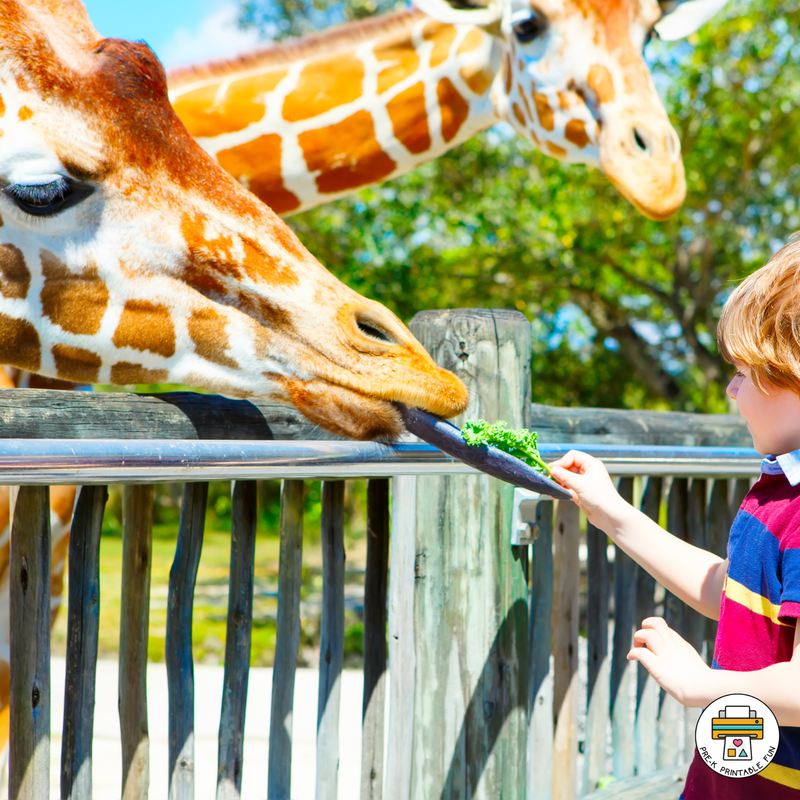
Plan a field trip to the zoo! This can be done in a variety of ways depending on your learning program. You can plan a visit to a local zoo (if you have a group be sure to call and let them know you are coming so they can plan for special accommodations), invite a zookeeper to the program to talk about their work, or use a virtual field trip.
Materials & Direction
Materials List:
– Transportation to the zoo (if applicable)
– Admission tickets or fees (if applicable)
– Snacks and drinks
– Notebooks or journals for each child to record their observations
– Any required permission forms
Preschool Learning Objectives:
– Develop an appreciation for animals and nature
– Practice observational skills by identifying different animals and their behaviors
– Learn about different animal habitats and environments
– Enhance social skills by interacting with peers and zoo staff
– Develop language skills by describing and discussing animals seen at the zoo
Preschool Teacher Instructions:
1. Before the field trip, introduce the concept of a zoo to the children. Discuss the different types of animals they may see and what they might learn on the trip.
2. Prepare the necessary materials and arrange transportation if needed.
3. On the day of the field trip, remind children of the rules and expectations for behavior at the zoo.
4. Encourage children to ask questions and engage with the zookeepers or staff to learn more about the animals.
5. Use the notebooks or journals to encourage children to record their observations, drawings, or thoughts about the animals they see.
6. After the field trip, have a group discussion to reflect on their experiences and what they learned.
7. Provide an opportunity for children to share their favorite part of the trip and what they found most interesting.
8. Follow up with extension activities such as creating animal-themed art projects or researching more about specific animals seen at the zoo.
9. Differentiated Instruction:
– For children who may be sensitive to loud noises or crowds, consider providing noise-cancelling headphones or a quiet area to take breaks.
– For children with mobility challenges, work with the zoo staff to ensure accessibility and accommodations are available.
– For children who may have difficulty focusing, provide visual aids or a checklist of animals to find at the zoo to keep them engaged.
